

Financial Aid
Tailored Financial Resources for Your Medical Education
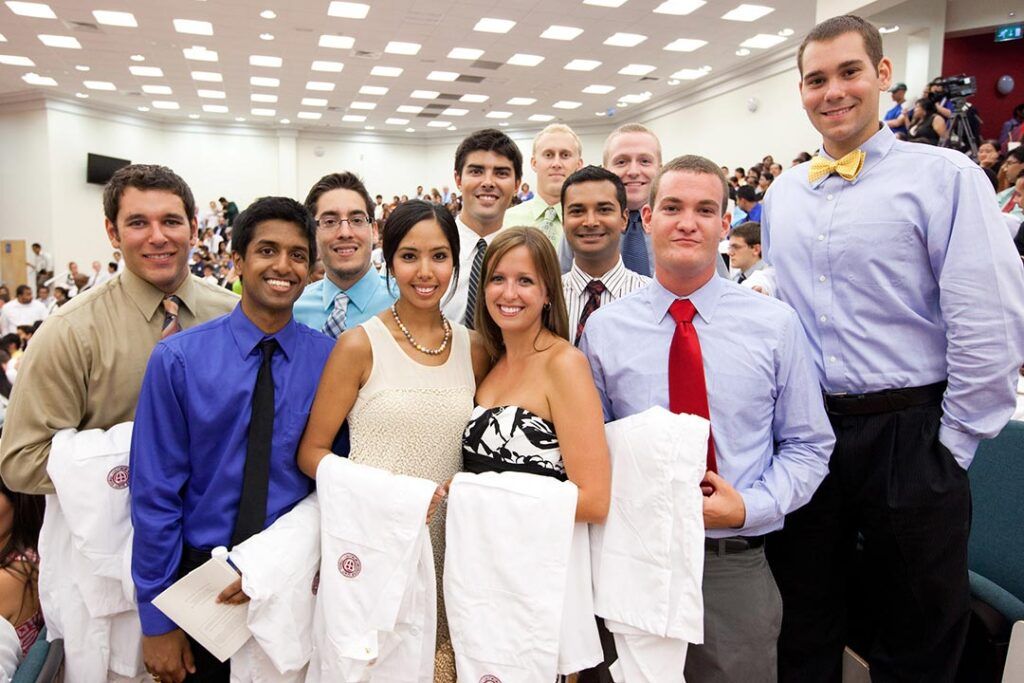
Invest in Your Medical Education with Confidence
At St. George’s University School of Medicine, we believe your focus should be on achieving your goal of becoming a doctor—not on worrying about how to finance your education. That’s why we offer a variety of financial aid options to help make medical school accessible and manageable.
Scholarships and Loans: Options that Work for You
SGU participates in the US Direct Loan Program, providing access to federal student aid for eligible students. Additionally, we offer a range of scholarships to support your journey, including:
- Merit-Based Scholarships for academic achievement
- Need-Based Scholarships for qualifying students, including those from international backgrounds
- Other tailored financial aid opportunities
Your Financial Aid Team
The Office of Financial Aid is dedicated to helping you navigate every step of the financial aid process. Our services include:
- Customized Financial Planning to help you map out your education funding
- Budgeting Tools and Advice to manage costs effectively during your studies
- Support with Loan Applications to streamline the process
- Debt Management Resources to prepare for a strong financial future
Contact Us
Financial Aid counselors can be reached Monday through Friday from 9am–5pm (Eastern).
US/Canada Toll-free
1 (800) 899-6337 ext. 1232
Worldwide
+1 (631) 665-8500 ext. 1232
Email
faid@sgu.edu
Student Loans
For US Citizens and Permanent Residents
US Federal Student Loans
Begin with a Comprehensive Plan
St. George’s University (SGU) medical students rely on a combination of federal loans, scholarships, and careful budgeting to finance their education. Developing a personalized financial strategy is essential for covering tuition, fees, and living expenses while minimizing unexpected costs. The Office of Financial Aid at SGU serves as a valuable resource, guiding students through each step of the financial planning process—from acceptance through to graduation.
US Federal Student Loans (Updated to Include One Big Beautiful Bill Act (OBBBA) Changes Effective July 1, 2026)
Available for the Four-Year MD portion of all dual degrees. St. George’s University participates in the William D. Ford Federal Direct Loan Program. These loans are available to US students who are US citizens or US permanent residents in the School of Medicine who are or have been enrolled in the Basic Science portion of their program in Grenada. (As of July 1, 2011, students in the SGU/NU Program are not eligible for the Federal Direct Loan Program.)
Direct Loan Programs
The William D. Ford Federal Direct Loan Program currently consists of the Federal Direct Unsubsidized Loan and, through June 30, 2026, the Federal Direct Graduate PLUS Loan. The maximum loan amount for which a student is eligible may not exceed the cost of attendance (as defined by St. George’s University) less any other financial aid received.
Eligible Legacy students can borrow up to $20,500 per academic year in Unsubsidized Loans, not to exceed the Subsidized/Unsubsidized aggregate limit of $138,500.
Important Upcoming Changes Under OBBBA (Effective July 1, 2026)
Beginning July 1, 2026, significant federal student loan changes take effect under the One Big Beautiful Bill Act (OBBBA):
Elimination of Graduate PLUS Loans
- Graduate PLUS Loans will no longer be available for new borrowers starting July 1, 2026.
- Students who started at SGU, are continuously enrolled, have not reached their expected completion date and borrowed a Direct Federal Loan for the MD4 program before July 1, 2026, may retain access to the previous program rules for up to three additional academic years as “legacy borrowers.”
New Borrowing Limits for Graduate/Professional Students
For loans disbursed on or after July 1, 2026:
- Professional programs (including MD): capped at $50,000 per academic year and $200,000 aggregate limit.
- Lifetime Aggregate Limit – The overall Federal lifetime borrowing cap limits cumulative federal student loan debt to $257,500. This aggregate cap includes all Direct Subsidized and Unsubsidized Loans for undergraduate, graduate, and professional studies, as well as past Perkins Loans and Graduate Plus Loans.
Repayment System Changes
As of July 1, 2026, federal student loan repayment options are simplified:
- Only two repayment plans remain for new borrowers:
- A revised Standard Repayment Plan (Tiered)
- The new Repayment Assistance Plan (RAP), which bases monthly payments on a sliding percentage (1–10%) of adjusted gross income and provides forgiveness after 30 years.
Legacy plans such as PAYE, ICR, and SAVE will no longer accept new enrollees and sunset by July 1, 2028. IBR is the only plan that will remain available to legacy borrowers as of this date.
Interest Rates
Students may choose to pay interest while attending school; otherwise, it will capitalize at repayment.
- Interest rates for Unsubsidized Loans first disbursed on or after July 1, 2025: 7.94%
- Interest rates for Graduate PLUS Loans first disbursed on or after July 1, 2025: 8.94%
(NOTE: Graduate PLUS ends for new loan borrowers beginning July 1, 2026.) - Interest rates for Unsubsidized Loans first disbursed on or after July 1, 2026: 8.07%
- Interest rates for Graduate PLUS Loans first disbursed on or after July 1, 2026: 9.07%
(NOTE: Graduate PLUS ends for new loan borrowers beginning July 1, 2026.)
Loan origination fees (effective October 1, 2021):
- 1.057% on Unsubsidized Loans
- 4.228% on Graduate PLUS Loans
Disbursements & Refunds
Loans are typically processed for an academic year and disbursed in two installments, generally as early as 10 days before the start of each term. Loan funds are applied to the student’s account, and any resulting credit balance is refunded to the student by check or direct deposit within approximately 10 business days.
Grace Period & Exit Counseling
A one-time 6-month grace period is automatically applied after a student ceases at least half‑time enrollment. Online Exit Counseling is required for students who have borrowed a US Federal Student Loan and have withdrawn, dropped below five (5) credits, or graduated.
Repayment & Planning Tools
Repayment begins 6 months after students drop below half‑time enrollment. Monthly payment amounts depend on total borrowing and the selected repayment plan. Visit the Federal Student Loan Repayment Plans page at studentaid.gov to learn about repayment plans and to use the Repayment Calculator.
Application Process
Students apply for federal loans through the FAFSA at studentaid.gov, using SGU School of Medicine federal school code, G22333. Entrance Counseling and Master Promissory Notes are required in order to complete the application process.
To borrow US federal loans, students must be US citizens or permanent residents, remain enrolled at least half-time in the 4-Year MD program, maintain satisfactory academic progress, and not be in default on prior federal loans. These guidelines are subject to statutory and/or regulatory changes in the U.S. Higher Education Act and the Title IV Program Regulations. For details on how to apply, click here.
Title IV Authorization
Students borrowing US federal loans may complete a Title IV Authorization via their SGU Student Self Service account to allow the Office of the Bursar to apply federal loan funds toward non‑tuition charges such as books and health insurance in order to satisfy your student account.
Borrowers Rights and Responsibilities
SGU Federal Student Loan Updates: OBBBA Changes Effective July 1, 2026
This document provides an overview of current federal student loan rules and the upcoming changes under the One Big Beautiful Bill Act (OBBBA), effective July 1, 2026.
Comparison Table: Current vs. New Rules
| Category | Current Rules | New OBBBA Rules (July 1, 2026) |
| Loan Types | Unsubsidized + Grad PLUS | Grad PLUS eliminated; only Unsubsidized |
| Professional Academic year limit | Grad PLUS up to COA. Fully funded if eligible. | $50,000 |
| Professional Aggregate | No federal cap | $200,000 |
| Federal Lifetime Aggregate | $138,500 for subsidized/unsubsidized loans | $257,500 for all federal loans borrowed |
| Repayment Plans | Multiple IDR plans | Only Standard + RAP |
| Income Driven Repayment Options | IBR, PAYE, ICR, SAVE | PAYE/ICR/SAVE closed for new borrowers; RAP primary and Standard |
| RAP | N/A | 1–10% AGI; 30-year forgiveness |
| Legacy Borrowers | N/A | Old rules up to 3 years or until expected completion of program whichever is less, for students who borrowed for SGU MD4 prior to July 1, 2026 who maintain continuous enrollment. |
Eligibility Requirements:
- U.S. citizen or permanent resident
- Enrolled in SGU’s MD program
- Maintain satisfactory academic progress
- No default on prior federal loans
How to Apply:
- Complete the FAFSA and enter SGU School of Medicine federal school code: G22333.
- Submit required documents to the Office of Financial Aid
- Meet with a financial aid counselor to customize your plan
Scholarships
Medical school is a significant investment in your future. SGU offers a variety of scholarship opportunities that can help you achieve your dream of becoming a doctor. Each SGU award is specifically tailored to recognize and reward exceptional qualities in aspiring medical professionals. From academic merit scholarships to scholarships that recognize community service, achievements in research, a desire to work with populations that are traditionally underserved in medicine, and service in the healthcare sector, SGU is committed to fostering a diverse and talented community of future doctors.
All students admitted to the Four-Year Doctor of Medicine (MD) or to one of the Seven-Year, Six-Year or Five-Year Medical Degree Tracks are automatically reviewed for academic and other scholarship type eligibility at the time of acceptance.
Private Educational Loans
Private educational lenders in the United States offer students at St. George’s University alternate loans. US Students can apply for these loans to meet all or part of their cost of attendance. Students who are considering the SGU/NU Program can explore these options. Some lenders may also offer private loan programs for parents, guardians, sponsors, or other individuals who wish to borrow on behalf of the student to help fund their education. These private loan programs are all credit-based and are offered only to borrowers who have a satisfactory credit history as determined by the lender. The loans may have a fixed or variable interest rate that is tied to an index, such as LIBOR or PRIME, plus a margin. The interest rates and fees you pay on a private student loan are based on your credit score and the credit score of your cosigner, if applicable. These loans have repayment terms that begin following graduation or withdrawal from school and may be able to be extended up to 25 years.
The Office of Financial Aid at SGU provides extensive financial aid counseling services to students in order to help them understand the eligibility requirements, terms and conditions.
St. George’s University does not prefer, recommend, promote, endorse, or suggest any lenders. You are not required to borrow from any of the lenders appearing on these lists and there is no penalty for selecting a different lender, if available.
For Canadian Citizens
Federal Loans, Provincial Loans & Federal Grants
Veterans Benefits
St. George’s University is a participant in the Department of Veteran Affairs Educational Programs. Only students who were a uniformed service member, veteran, veteran’s dependent, surviving spouse, or child of a deceased veteran, and are registered in the MD or DVM Program are eligible for VA Benefits.
VA Education Programs
The following is a list of Veteran Affair benefit programs that the SGU MD or DVM programs are eligible for:
- Chapter 30 – Montgomery GI Bill® – Active Duty
- Chapter 31 – Veterans Readiness & Employment (VR&E) in numerial order
- Chapter 32 – Veterans Educational Assistance Program (VEAP)
- Chapter 33 – Post 9/11 GI Bill®
- Chapter 34 – GI Bill®
- Chapter 35 – Dependents Educational Assistance (DEA)
- Chapter 1606 – Montgomery GI Bill® – Selective Reserves
- Chapter 1607 – Reserve Educational Assistance Program REAP
Initiating Veterans Benefits at SGU
Submit the appropriate application form listed below to the VA:
- Student should compare VA education benefits and review payment rates by utilizing the Comparison Tool.
- Apply for benefit through the VA using the Veterans Online Application (VONAPP).
- Submit Certificate of Eligibility to an SGU School Certifying Official (see contact information below).
Receiving Veterans Benefits at SGU
After you have initiated your Veterans Benefits at SGU, a School Certifying Official will contact you at the beginning of each term. Once your enrollment has been certified for a term in the current VA year, you will not be automatically certified for another term, unless you request otherwise. You will receive an automatic electronic notification from the VA after your enrollment has been certified. Payment of benefit can take up to two to four weeks after it is certified. Eligibility and payment amounts are determined by the VA and not by SGU.
Please access visit the VA’s Rate Tables for the various benefit programs.
Informational Links
Contact Us
For Veterans Benefits questions, please reach out to:
Joshua Rivera
St. George’s University School Certifying Official
Phone: (631) 665-8500 Ext. 1675
Email:
faid@sgu.edu


New Year, New Career Scholarship
$65K in tuition support to change your life
Backing professionals who are making the bold transition into medicine. January 2027 term only.
Then: Dance instructor
Then: Clinical Trial Coordinator
Dr. Lauren Sussman, SGU ’20
Now: Pediatrician

From Dr.eam To Doctor
Learn more about our MD program and tracks
Every aspect of our MD program and tracks are intentionally designed to support you on your path to becoming a physician.
Flexible Start Dates: Choose from multiple entry terms in January, April, or August to begin your medical education at your convenience.
Average of 2020, 2021, 2022, 2023 and 2024 residency placement rates. Residency placement rate is defined as the total number of students/ graduates who obtained a US residency divided by the total number of students / graduates who applied to a US residency program in a given year as of October 2024.
Program and Track Highlights
- Global Recognition: SGU’s School of Medicine has been continuously accredited for decades, enabling our students to be eligible to practice in the US.
- Clinical Training: 85+ hospitals and health systems in the United States, Canada, and the United Kingdom offer clinical and ambulatory training and support
- Legacy of Excellence: Join the network of over 25,000 graduates* who have impacted healthcare worldwide.
*Based on the number of students who have completed the Doctor of Medicine program from 1981-2025.
Connect With Us.
- Learn more about our MD program and tracks
- Receive priority invitations to our prospective student events
We will be in touch soon, but if you have questions now, email us at admissions@sgu.edu